ECOIN

Economics, but readable, visual, and relevant.

"EXPLORING THE IDEAS BEHIND THE HEADLINES."

Ecoin is an independent youth-led publication dedicated to understanding the forces shaping our world. Through rigorous analysis, compelling design, and clear storytelling, we explore the economic, political, and cultural trends that influence everyday life.

From emerging technologies to public policy, our goal is not just to report what is happening, but to examine why it matters.

This Week in Economics

This Week

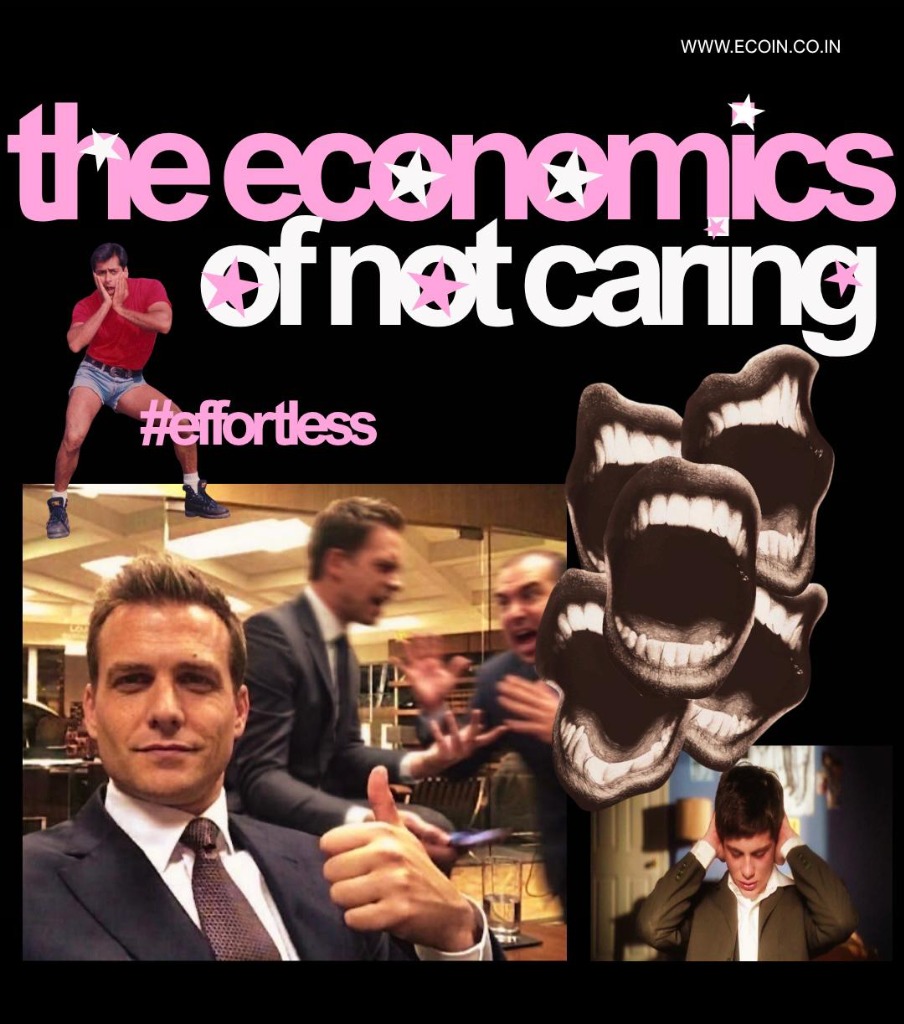
The Economics of Looking Like You Don't Care

Caring too visibly became uncool. But the effort hasn't disappeared — it's just moved backstage. Unpacking the hidden economics of effortless cool.

Read Full Article →
This Week

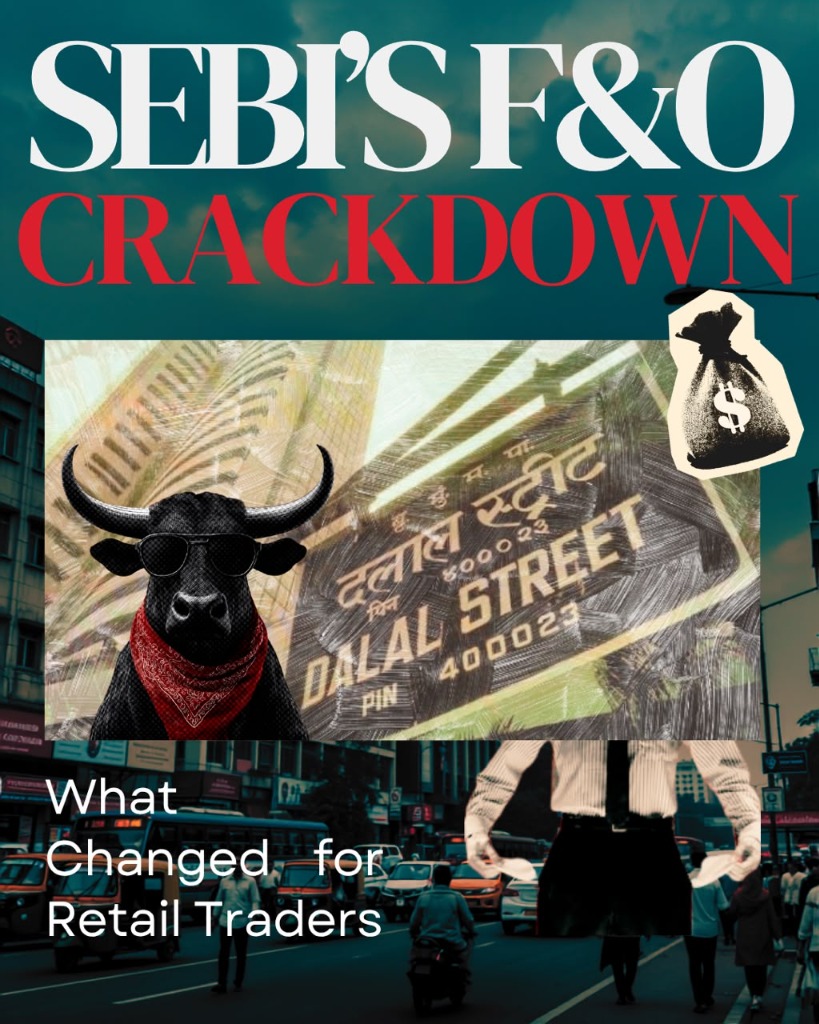
SEBI and F&O Crackdown: What Changed for Retail Traders?

Fewer people losing money. Each one losing more. That is not exactly a cure — that is triage. Unpacking India's derivatives crackdown.

Read Full Article →
This Week

Show Me Your Shorts, I'll Show You the Market

When the economy is booming, men's shorts get shorter. The unexpected connection between inseams and GDP growth.

Read Full Article →

The Breakdown

Monthly Deep-Dive

Religion and Economic Cooperation: The Role of Social Preferences

How do different types of religious belief affect cooperation and parochial altruism? Unpacking the economics of belief, trust, and the groups we call "us".

Read Full Breakdown →
Monthly Deep-Dive

The Economics of Luxury: Why Do People Pay More for Less?

Rolex watches, Hermès handbags, and pricing power. Why do consumers pay so much more for status, heritage, and exclusivity?

Read Full Breakdown →
Monthly Deep-Dive

The Hustle Generation: When Childhood Meets Capitalism

Scroll through social media for ten minutes and these messages will find you: "Retire your parents by 25." Welcome to the side hustle economy.

Read Full Breakdown →
Monthly Deep-Dive

India's ₹1.3 Trillion Question: Who Are You Selling To?

When a generation values identity over ownership, markets must adapt. How India's 377 million Gen Z consumers are rewriting the rules of demand.

Read Full Breakdown →

60 Sec Economics

Behind the Business

content coming soon.

About the Initiative

Public Economics & Policy Focus

We break down complex macroeconomic trends and public policies into understandable, digestible content.

Student-Driven Perspective

Created by students, for students. We provide fresh perspectives on how global economics affects our generation.

India Markets & Awareness

A specialized lens on the Indian economy, dissecting domestic pricing, market movements, and regulatory changes.

This Week in Economics

The Economics of Looking Like You Don't Care

The Economics of Looking Like You Don't Care

"In a generation where 'you're so cool' might be one of the biggest compliments you can receive, what exactly are we complimenting?"

I think there is something slightly funny about how much effort goes into looking like you put in none.

You want the picture to look candid, but not ugly. You want your room to look lived-in, but not messy. You want the outfit to look like you just threw it on, but obviously not a little too casually. You want the caption to sound like a thought you randomly had at 2 a.m., but not like something you sat with for forty minutes trying to make sound profound.

And God forbid you reply too quickly.

Somewhere along the way, caring too visibly became uncool.

But I don't think the interesting part is that we care about how we're perceived. Humans have always cared about status, approval, and belonging.

The interesting part is that we have become incredibly good at hiding that we actually do care.

We've learned to make preparation look like spontaneity, effort look like instinct, and self-consciousness look like confidence. We don't just want to be cool, we want to look like being cool came naturally to us.

And that distinction has created a surprisingly complex economic problem.

The imaginary audience

Think about posting a picture. Before posting, you notice everything: the weird thing in the background, the clothes, the lighting, whether a person is accidentally visible behind you, whether your expression looks awkward, whether the caption sounds too serious, whether the picture looks like you tried too hard.

And suddenly, a photograph becomes an exercise in predicting the thoughts of hundreds of people who may spend approximately two seconds looking at it.

Psychology has a name for part of this: the spotlight effect. Research by Gilovich, Medvec, and Savitsky found that people tend to overestimate how much their appearance and actions are noticed by others. Which is interesting, because it means that some of the social pressure we experience may be amplified by the fact that we imagine ourselves being watched far more closely than we actually are.

But whether or not anyone is actually watching closely almost becomes irrelevant. If you believe they are watching, you have an incentive to manage what they see.

And that is where economics begins.

We don't just express ourselves. We signal.

Economics has a useful concept for this: signaling theory. The basic idea is that other people cannot directly observe everything about us or what we do. They can't directly see how confident we are. They can't directly measure our social status. They can't immediately know whether we're secure, interesting, successful, fashionable, intelligent, or completely comfortable with ourselves.

So they infer from what we wear, what we buy, how we speak, what we post, what we don't post, how quickly we reply, how much we seem to care, and, increasingly, how little we seem to care.

Michael Spence's work on signaling is one of the foundational pieces of economic theory: when information about someone's characteristics isn't directly observable, behavior can act as a signal.

Now apply that to "cool," or effortlessness. You can't really prove that you're cool or effortlessly good at everything you do — in fact, trying to prove it too directly might make you look less cool. So we try to communicate indirectly.

We look relaxed, we act unbothered, we try to look spontaneous, we don't seem desperate for approval, and we seem like we'd be completely fine if nobody liked the post.

And that last one is particularly interesting, because the signal isn't "look at how much I have." It's "look at how little I need."

The economics of not caring

This is where our understanding of status gets more interesting. Traditionally, status can be signaled through things that are visibly expensive: a luxury watch, a large house, an expensive car, a prestigious school. These communicate resources or achievement in a fairly straightforward way.

But there is another kind of status signal that works almost in the opposite direction: effortlessness. The person who looks like they don't need to try can appear more socially secure than the person visibly trying to impress everyone.

Which creates a bizarre incentive. If looking effortless is rewarded, then people have an incentive to become better at looking effortless. And suddenly the thing being optimized isn't the quality of the behavior, it's the perception of the behavior.

The photograph doesn't merely need to look good; it needs to look like you didn't try to make it look good. The outfit doesn't merely need to look stylish; it needs to look like you didn't think about it. The caption doesn't merely need to be interesting; it needs to look like you didn't sit there trying to be interesting. You get it.

And this is where the paradox begins: the more valuable effortlessness becomes as a social signal, the more effort we have an incentive to put into producing the appearance of effortlessness.

The effort hasn't disappeared. It has just moved backstage.

Coolness as a positional good

This is where economic theory becomes especially useful. Some things have value partly because of their relative position — economists call these positional goods.

Status is an obvious example. If you're the only person in a room with a particular social distinction, that distinction can mean something. If everyone has it, it means much less. And that creates a problem for "cool," because coolness is inherently comparative; you don't simply want to be cool, you want to be cool relative to everyone around you.

Imagine that tomorrow everyone suddenly starts dressing exactly the same way. Nobody has become objectively less attractive, less wealthy, or less talented — but the clothes have lost some of their ability to distinguish. The signal has become common, and once a signal becomes common, people need another one.

This is where status competition starts behaving like a treadmill. One person discovers a certain aesthetic. It makes them distinctive. Other people copy it. It becomes popular, then recognizable, then ordinary, then uncool. Everyone searches for the next thing. And the cycle begins again.

The strange thing about a status race

A normal race has a finish line. Status competition doesn't — because if everyone runs faster, everyone can be running faster while remaining in roughly the same relative positions.

This is the logic behind economic work on positional competition and positional externalities: individually sensible attempts to improve one's relative standing can create a situation in which everyone invests more into the competition without anyone gaining a corresponding relative advantage. Robert Frank's work on positional externalities examines exactly how competition for relative position can generate collectively inefficient outcomes even when each individual choice makes sense.

Social media gives us a weird, almost microscopic version of this. You have an incentive to make your profile slightly more interesting, so you do. Everyone else has the same incentive, so they do too. Now your original improvement no longer distinguishes you, so you try again, and again. Nobody necessarily told you to do this, there's no committee deciding your Instagram needs to become more aesthetically coherent. There is simply an incentive present.

Be more interesting. Be more attractive. Be more authentic. Be more effortless. Be more distinctive. And because everyone is responding to the same incentives, the baseline keeps moving.

The Instagram paradox

This is why I find the evolution of Instagram culture so intriguing. There was a period when social media could feel much more like: "here is what I'm doing." Now it feels more like: "here is a version of what I'm doing that communicates something about who I am."

That difference is tiny, but enormous. You aren't just posting a photograph, you're communicating taste, lifestyle, social position, personality, and how much you care about communicating any of those things.

Sometimes the communication becomes almost comically specific: the elegant font, the random video you reposted, the sentence meant to make you stop scrolling and "think deeper," the carefully blurry photograph, the intentionally imperfect room, the photo that looks accidental, the caption that sounds like you don't care whether anyone understands it.

The same visual language begins appearing everywhere, and we arrive at an interesting contradiction: everyone wants to look individual while using increasingly similar signals to demonstrate their individuality.

When the signal becomes the aesthetic

Signaling theory has more range here than I expected. A signal has value partly because it conveys information. But what happens when everyone learns the signal?

Suppose looking spontaneous communicates confidence. Eventually, everyone else learns that too — so they begin manufacturing spontaneity, and the signal itself becomes a recognizable behavior.

People learn what "authentic" looks like, and once authenticity has a recognizable appearance, it becomes possible to imitate — which doesn't mean the person is faking it. That's an important distinction. Someone can genuinely like the aesthetic they're using, genuinely not care, or genuinely prefer minimal captions.

The problem isn't whether the person is secretly lying. It's that the social reward attached to certain behaviors can influence which parts of ourselves we choose to make visible. Research on Instagram has examined precisely this relationship between self-presentation and perceived authenticity, including differences between more permanent posts and more spontaneous formats such as Stories.

So perhaps the question isn't "is Instagram making everyone fake?" The right question is: what happens when authenticity itself becomes socially valuable?

The market for authenticity

Once authenticity becomes desirable, it becomes something people have an incentive to signal — and this is where the economics gets slightly absurd.

Imagine there's a social reward for looking authentic. People respond to that reward and get better at looking authentic. Others observe those behaviors; the behaviors become recognizable; recognizable becomes a trend; trends become common — and then the behavior stops being as effective at distinguishing authenticity, so people need subtler signals. The aesthetic gets more niche, the references more obscure, the imperfection more carefully chosen.

You don't just chase looking authentic, you want to look authentically unlike everyone else who is trying to look authentic. Which is almost impossible.

The invisible cost

Economics isn't only about money. The resources at stake here include time, attention, and effort, and social media can make us spend all three quite easily:

How long did it take to choose the photograph? How many pictures did you take before choosing one? How many times did you open the app before posting? How long did you wait before replying? How much mental energy went into deciding whether something would make you look too eager?

This is a form of invisible labor, and the strangest part is that the better you perform it, the less anyone can see it. If I spend two hours making something look effortless, the successful outcome is that you believe I spent no time on it at all.

The work has succeeded by disappearing.

And then there's the game-theory problem

We know other people curate themselves. You know Instagram isn't an objective representation of someone's life. I know it. You know I know it. I know you know I know it.

And yet we keep responding to the signals. We know the photograph was selected. We still interpret it. We know the caption was thought about. We still infer something from it. We know everyone wants to look cool. We still use other people's apparent coolness as information.

This creates a strange social game where everyone knows there's a performance, but the performance still works. You don't need to believe someone's presentation is completely natural, you only need to believe it communicates something about them. That's enough to keep the system running.

Why do we suppress the things that make us look like we care?

Let's think about texting. You see the message, you want to respond, you respond. And then you wonder whether you responded too quickly.

So next time, you wait — not because you're busy, not because you don't want to talk, but because speed itself has become a signal. Fast can mean eager. Eager can mean invested. Invested can mean vulnerable. And vulnerability can feel socially expensive.

So an ordinary action like sending a text turns into a signaling game.

The same thing happens with excitement. You want to say "I love this," but instead you say "that's actually kind of cool." You want to post something you genuinely love, but you wonder if it's too much. You want to dress up, but you make it look casual. You want to show that you care, but you edit the caring out.

The things that make us human — enthusiasm, eagerness, excitement, visible effort — become the very things we learn to conceal.

And maybe we've even monetized imperfection

This is where the concept of wabi-sabi feels relevant. We usually associate wabi-sabi with appreciating imperfection, incompleteness, and impermanence. There's something beautiful in the idea that the imperfect thing doesn't need to justify itself. A crack can simply be a crack. Something unfinished can simply be unfinished.

But social media has created a strange modern version of imperfection: the messy room presented as "aesthetically messy," the blurry photograph as "the right kind of blurry." So we arrive at another paradox: what happens when we put so much effort into appearing imperfect that imperfection itself becomes a form of perfection?

Maybe we don't just curate our achievements anymore. Maybe we curate our flaws too.

So what are we actually competing for?

Maybe this entire thing isn't really about the fact that I saw my friends posting the same exact thing, calling it "unique" and "cool," got mildly annoyed, and decided to turn my irritation into an article.

Maybe it's about something much older, something that existed long before Instagram, before algorithms, before oddly specific "deep" thoughts: status, belonging, recognition, and, perhaps most importantly, the desire to be valued without ever having to ask to be valued.

Maybe that's why "cool" is such an interesting word — because coolness promises something very specific: social value without visible effort. It says: I belong here. I know what I'm doing. I don't need your approval. I'm comfortable enough with myself that I don't have to try.

But the irony is almost perfect. The moment that state becomes desirable, people start trying to reproduce it. And when enough people reproduce it, it becomes another competition.

So maybe the modern status race isn't always "who can show the most?" Sometimes it's "who can show the least while still being noticed?"

The economics of disappearing effort

This part genuinely bothers me, even as I write it. Not that people care. Not that people want to look good. Not even that social media encourages self-presentation — none of that is new.

It's that we have become increasingly sophisticated at hiding the labor behind the image. There is labor in choosing what to post, labor in choosing what not to post, labor in deciding how imperfect something should look, labor in knowing when to reply and when not to, labor in appearing spontaneous, labor in appearing indifferent, labor in looking like you don't care.

Because the entire purpose is to make that labor invisible, we don't experience it as labor — it just feels like "being cool." But that's exactly what makes it such an interesting economic phenomenon: the more successful the signal, the less visible its cost becomes.

Maybe that's the real paradox of effortless coolness. We aren't living in a world where nobody cares. We're living in a world where caring has become something we've learned to conceal.

And if everyone is putting effort into looking effortless — if everyone knows everyone else is performing, if everyone is competing for the appearance of not competing — then perhaps the final status symbol isn't being the person who tries the least. Maybe it's being the person who no longer needs to prove that they don't care.

Or maybe that's just another signal too. And if it is, we've got a problem.

I want to leave you with three questions, which I keep asking myself:

If looking effortless has become a status signal, and status signals become less valuable once everyone can imitate them, what exactly are we competing for anymore?

If I know you're performing, and you know I'm performing, why does the performance still work?

And if we've become so good at hiding the effort behind everything we do, when was the last time we did something without wondering how it would look?
Monthly Deep-Dive

India's ₹1.3 Trillion Question: Who Are You Selling To?

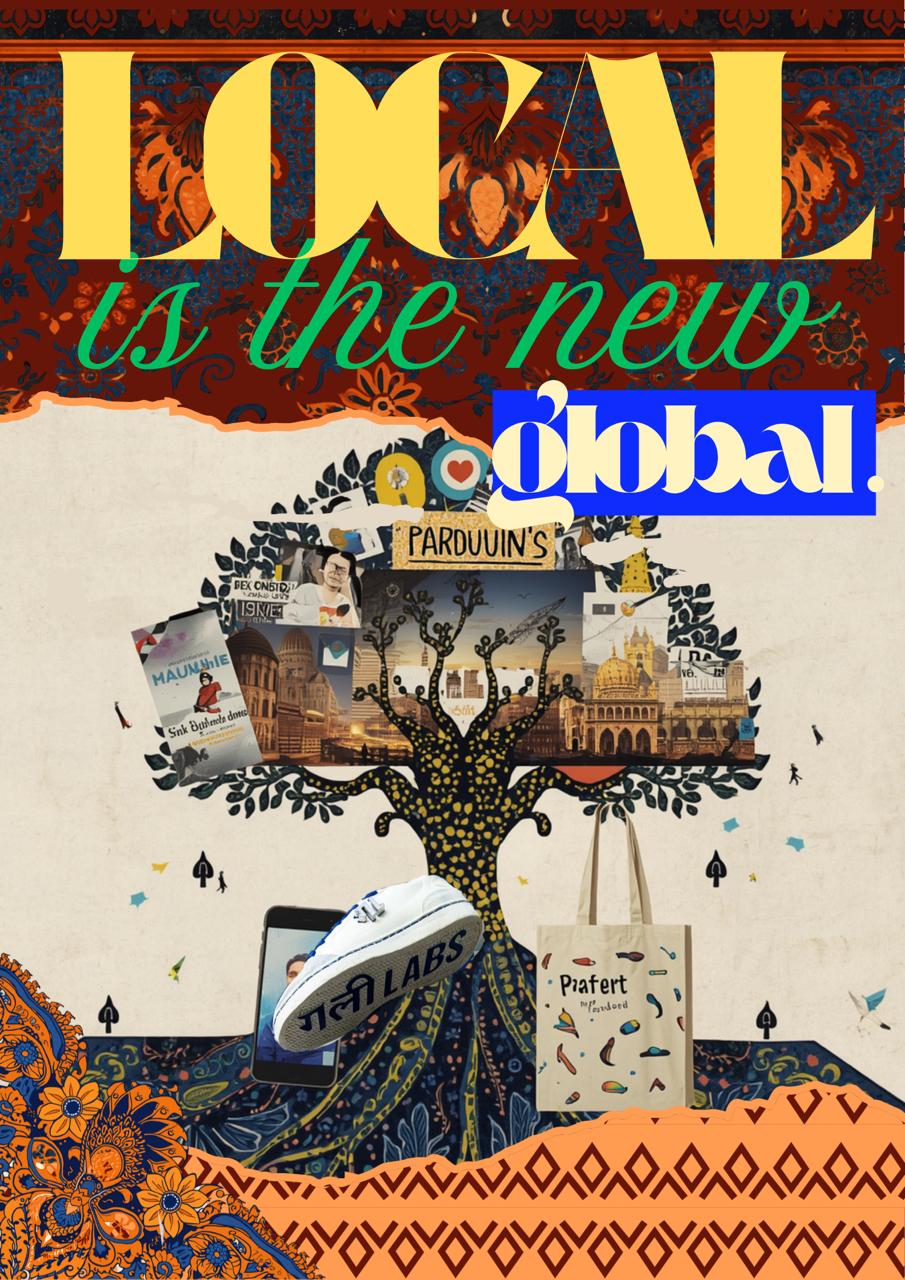
India's Gen Z Consumer Revolution — Local is the new Global

When a generation values identity over ownership, markets must adapt.

377 Million

Gen Z consumers in India — the largest such cohort in the world

$860 Billion

Current consumer spending driven by Indian Gen Z

$1.3 Trillion

Projected Gen Z consumption by 2030 (Redseer)

$100 Billion

India's D2C market size in 2025

Chapter 1 — The Question That Nobody Asked

It was the year 2023. A banker named Arjun Singh left not only his job at JP Morgan but also his home in Sydney. He flew back to Delhi with dreams one would never expect. He returned to make sneakers. Not imported sneakers. Not licensed sneakers. Sneakers stitched by hand, which were inspired by Indian motifs. Handmade by karigars in a workshop in Noida, which he called his laboratory.

It was the year 2025. Gully Labs not only raised ₹8.7 crore in seed funding but also sold out a limited drop in under six minutes. It had been featured on CNBC TV18's Swadeshi series.

These sneakers cost more than a pair of Reeboks, yet they sold out faster than most Reeboks ever do in India.

The pressing question is: why? Or more importantly, how?

The most obvious explanation is marketing. However, there is a deeper reasoning behind their success. That reasoning is economics. Specifically, it concerns a structural shift in what Indian consumers in their late teens and twenties now consider before buying any good.

India's Generation Z, comprising roughly 377 million people born between 1997 and 2012, is the largest youth population in the world. It is also the first generation in all of Indian economic history to have grown up with smartphones rather than with an aspiration to own foreign goods. For older generations, a Nike swoosh or an L'Oréal label was the only implicit promise of the global: modern, quality-certified, and aspirational. However, for Gen Z, that promise has curdled into something that one could almost call generic. Their wants now are hard to manufacture and even harder to copy. They want proof that a brand understands who they actually are.

That shift from aspiration to identity is single-handedly causing the most consequential demand-side change in the Indian consumer economy in recent times, as consumers increasingly seek brands that reflect their personal values and lifestyles. And the brands that have grasped it are not the legacy giants that have been around forever. They are scrappy, digitally native, mostly founder-led companies built by people who either belong to this generation or have watched it closely enough to understand its needs.

Chapter 2 — The Birth of a New Market

Let's begin with macroeconomics to truly understand what is happening. India's private consumption nearly doubled from $1 trillion in 2013 to $2.1 trillion in 2024. The country recorded 185.8 billion digital payment transactions in FY25 alone, with UPI accounting for 83.4 per cent of that, spreading across a base of one billion internet connections and 260 million online shoppers. This is not just a market becoming digital, but a market that has already crossed that threshold and is now thriving and growing within it.

At the centre of this thriving market lies the direct-to-consumer business model (D2C). India's D2C market, which was earlier forecasted to reach $60 billion by 2027, reached $100 billion in 2025. Conservative estimates have been made, and it is now put at $267 billion by 2030, at a CAGR of 25 per cent. India now hosts approximately 11,000 D2C companies, which accounted for nearly 18 per cent of all retail space leased in 2025. These are not startup vanity metrics; rather, they represent a fundamental restructuring of the supply chain where the wholesaler, the regional distributor, and the multi-brand retailer are being systematically disintermediated.

The economic logic behind D2C is simple yet powerful. It cuts out the intermediary, which not only allows brands to earn a larger share of the consumer rupee but also collects first-party data that was previously inaccessible. However, the biggest advantage of this model is the quickening of the feedback loop between producers and consumers, from quarters to mere days. For a consumer base that expects new drops weekly, this operational agility is not just a differentiator but table stakes.

"Gen Z doesn't just shop — they shop to express, to belong, to be seen, and to influence. Trends are 1.7x more influential than brand heritage in driving purchase decisions."

— Praxis Global Alliance & IndianRetailer.com, IReC × D2C Summit 2025

Chapter 3 — Putting Theory to the Test

The brands winning in this environment all share a quality that is difficult to get across in a pitch deck but is immediately understood by the target consumers. They are built on cultural honesty. They do not perform "Indianness" but are rather constituted by it.

Let's take Snitch, the Bengaluru menswear brand that could be rightfully called the most economically dramatic story of the generation. It was founded in 2019, first as a B2B garment supplier, but it pivoted to D2C in 2020. A pandemic-era decision that could not have been better timed. In 2022, the revenue was ₹11 crore. But by FY25, the revenue crossed ₹520 crore, which was a 47x revenue growth in four years. It has over 51 profitable stores and a valuation of ₹2,500 crore, all achieved within 4 years. Snitch built its influence through nano and micro-influencers, not aggressive discounting or celebrity endorsement. They paid hundreds of creators with between 1,000 and 100,000 followers who produced real-world styling content that Gen Z audiences trusted simply because it did not feel like advertising. Design cycles were fastened to 15–20 days with new drops related to trending audio, memes, and cultural moments. The brand didn't just follow fashion but rather the internet, which for Gen Z consumers is the flow of culture itself.

Rimjim Deka and Partha Kakati started Littlebox, a brand for women's clothing, in 2022. It has a 25-day inventory cycle and adds 100 new styles every week. Its demand-forecasting algorithm keeps dead stock to a minimum, which is something that older retailers can't do. In 2025, it made ₹17.5 crore. Bonkers Corner started in 2020 and built a streetwear brand around gender-neutral fits, oversized shapes, and licensed pop-culture collaborations with Marvel, Disney, and Hello Kitty. The brand has since grown to 19 exclusive stores in India's major cities without ever running a traditional print campaign. The two brands have something in common besides their growth numbers: they both made a conscious decision about whose world they were designing for and stuck to it.

A similar story may be found in the footwear business. Eco-conscious urban Gen Z consumers have developed a devoted following for Thaely, a company that makes trainers from recycled plastic bags and upcycled materials. Ten years ago, this market segment was nonexistent. At a time when both were becoming identity markers rather than product features, Neeman's, which is based on merino wool and natural fibres, positioned itself in the space between performance and sustainability. By FY32, the Indian trainer market is projected to grow from its FY24 valuation of $3.88 billion to $6 billion. As recently as 2020, it would have seemed unthinkable that India is now the second-largest hotspot for D2C sneaker startups worldwide, after the United States.

2.5 million digital producers are already influencing over $350 billion in annual consumer expenditure, which is expected to surpass $1 trillion by 2030, according to a BCG analysis published in 2025. In 2024, YouTube's creative ecosystem alone boosted India's GDP by more than ₹16,000 crore.

Importantly, compared to the global average of 65 per cent, 83 per cent of Indian Gen Z consumers identify as content creators. Economically speaking, this is significant since it indicates that the distinction between distributors and consumers has essentially vanished. There is a non-trivial chance that a Gen Z customer who buys a pair of Gully Labs trainers will also record an unpacking reel, upload a styling video or create a review thread. At the same time, the marketing channel is the consumer. This is a compounding benefit for companies that are based on cultural authenticity: Genuine fans' organic content has a legitimacy that paid advertising, no matter how much it costs, cannot match.

As a result, influencer marketing's economics have changed. According to the BCG analysis, in the near future, brand spending in creator marketing is expected to rise by up to three times. The more significant change, however, is qualitative: brands are shifting from a broadcast model—one message, one celebrity, millions of passive recipients—to a network model, where hundreds of smaller, more focused voices produce content that reaches smaller but much more responsive audiences. Because its community handled a large portion of the distribution, Snitch's marketing expenses decreased by 50% in FY25 while income almost doubled.

Chapter 4 — Shift in Beauty and Finance

Fashion is not the only area where identity-driven demand is changing. The disruption has been equally noticeable in skincare and cosmetics. While traditional FMCG companies recorded single-digit growth during the same period, India's D2C beauty business expanded by 88% in 2024 to reach $2.1 billion in revenue. One thing unites the brands that are propelling that expansion: they communicate clearly.

Transparency was the cornerstone of Minimalist's entire marketing strategy, which included labelling serums with the percentages of active ingredients, eschewing aspirational iconography, and setting prices about 40% lower than those of comparable formulas in other countries. In 2024, it increased by 300 per cent annually. Sugar Cosmetics, which today generates over ₹600 crore annually over 40,000 retail touchpoints, developed hues and formulations particularly calibrated for Indian skin tones, an apparently easy move that legacy corporations had mostly failed to execute. mCaffeine, which generated over ₹150 crore in revenue in 2024, was founded on caffeine-based personal care for youthful, active consumers. In each instance, the brand's main selling point was essentially a kind of cultural acknowledgement: "We see you, we made this for you, not for a projected idea of who you should want to be."

The change is even seen in financial behaviour. According to PhonePe's Share.Market platform, between August 2024 and July 2025, roughly 48% of its mutual fund investors were between the ages of 18 and 30. Ninety-two per cent of them opted for SIPs, with an average monthly investment of ₹1,000. According to NSE data, about 69% of Indian stock market investors are under 40. Gen Z is interacting with capital markets without waiting for financial maturity. Compared to preceding generations, they are entering younger, more digitally, and with behaviours that are methodical, low-cost, and long-term.

Chapter 5 — The Risk of Mistaking the Movement

All of this carries some risk. At ₹500 crore in revenue, the D2C model, which works well for founder-led brands, becomes operationally costly. Early growth figures do not show the compounding effects of inventory management, supply chain resilience, customer acquisition costs on mature platforms, and the unit economics of physical retail development. Even though EBITDA increased significantly in FY25, Snitch spent ₹1.02 for every rupee of revenue. The primary strategic challenge facing this generation of brands is scaling authenticity without diluting it, and not all of them will be able to do so.

Another concern is whether incumbents will change quickly enough to offset the impact. The fact that Aditya Birla Fashion launched OWND! in 2025, a quick fashion brand aimed at Generation Z with products under ₹1,200 with a 400-store strategy, indicates that the conglomerates are moving forward. A similar objective is indicated by Trent Ltd.'s Burnt Toast label, which was introduced in the same year. Currently, cultural fluency—rather than capital—is what gives Snitch and Gully Labs an advantage. It is possible to raise capital. It is more difficult to produce cultural fluency at a rate that a procurement committee can approve, the kind that makes a twenty-two-year-old in Lucknow feel as though a brand truly belongs to her world.

"The winners will deliver seamless phygital journeys — quick commerce, AR try-ons, pop-ups — and design-led innovation. Brand loyalty is becoming fluid, powered by a $250 billion creator economy and social-first influence."

— Kotak Mutual Fund, Gen Z Consumption Report 2026

For both investors and economists, the larger structural concern is what happens to a market when cultural identification takes over as the main organising force of demand. According to past price-elasticity data, demand is therefore less predictable. Because lineage loyalty has waned, brand switching costs are paradoxically both lower and higher due to the intensely personal nature of identity identification. It implies that cultural distinctiveness is more important than geography, as a streetwear company in Delhi may find its most devoted client in Coimbatore.

Chapter 6 — The Gully Up

For anyone starting a consumer firm in India today, the unsettling reality is that the previous model was lenient. Spending money could help you build brand awareness. A billboard on the Western Motorway and a famous person's visage could create aspiration. You could rely on the implied promise that familiarity meant loyalty, that scale meant trust, and that foreign meant better. For some customers, that model is still somewhat effective. However, it is losing customers every year, and those who are leaving are the youngest, most tech-savvy, and most valuable individuals in the market.

Brands that have realised this are not waiting to be investigated. Snitch has already launched in the UAE and aims to generate ₹1,000 crore in revenue by FY26. Gully Labs is considering drops for Singapore's and Dubai's Indian diaspora. 40,000 retail touchpoints are operated by Sugar Cosmetics. A multinational that had spent decades marketing the same type of opaque, aspirationally branded product that Minimalist was designed to replace purchased Minimalist for about ₹3,000 crore. The market's strongest indication to date that the disruption is significant enough to warrant purchase is that acquisition.

What follows is not just an increase in the size of the same brands. The entire link between Indian identity and commerce is being renegotiated. A generation that grew up viewing the world on a smartphone screen, learning how to cook from YouTube, how to dress from Instagram, and how to invest from Zerodha, does not view marketers as outside authorities dictating their desires. They perceive brands as mirrors. Those who are true to themselves are retained. Those that are not are scrolled past.

This generation, which makes up 27% of India's population, will want $1.3 trillion in consumption by 2030. In the third-largest economy in the world, they will be the main consumer force. Whether a company is a first-time founder or a heritage conglomerate operating in India, the question is not whether to take them seriously. The question is whether this generation will recognise themselves in what you've created. No amount of marketing funds will close the gap if the response is negative. If the response is in the affirmative, you won't require as much money as you anticipate.

Sources & Data References

Redseer Strategy Consultants, 'Gen Z: Defining Trends, Influencing Spends' · BCG, 'From Content to Commerce: Mapping India's Creator Economy' (2025) · KPMG Asia Pacific & GS1, 'Navigating the Future of Seamless Commerce in Asia Pacific' (2024) · CBRE, 'India's D2C Revolution: The New Retail Order' · Praxis Global Alliance & IndianRetailer.com, IReC × D2C Summit 2025 · NSE Investor Data, June 2025 · PhonePe Share.Market Platform Data, FY25 · Kotak Mutual Fund Gen Z Consumption Report, 2026 · YouTube Culture & Trends Report 2024 · DHL E-Commerce Report 2025 · IMARC Group Indian Sneaker Market Report · Inc42, Entrepreneur India, Indian Retailer — brand-level reporting on Gully Labs, Snitch, Littlebox, Bonkers Corner, Minimalist, Sugar Cosmetics, mCaffeine.

Articles

60 Sec Economics

60 Sec Economics

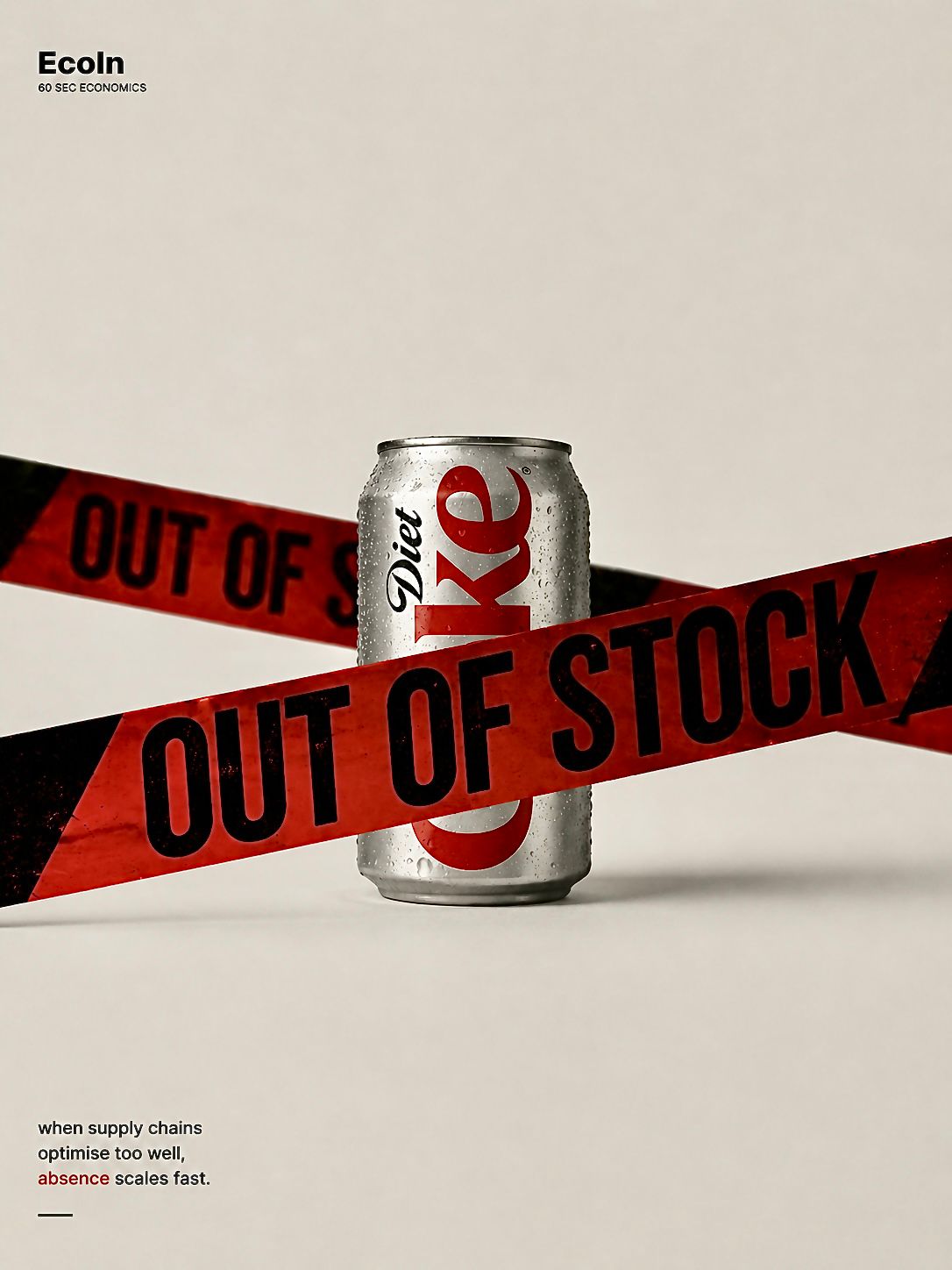
Out of Stock: When Packaging Breaks the Product

Out of Stock: When Packaging Breaks the Product

You're not cursed, and your store isn't lazy if you've noticed empty Diet Coke shelves. Global aluminium shortages, bad timing, and geopolitics are driving the current scarcity.

In short, the world is running out of cans—the containers for Diet Coke, not the drink itself. The conflict in Iran in 2026 disrupted the global aluminium supply. Smelting has stopped, and shipping through the Strait of Hormuz is slow. Experts say up to 3.5 million tonnes of aluminium may be lost this year. No aluminium, no cans, no Diet Coke. The simplicity is plainly disappointing.

The fact that this is occurring at the worst possible moment exacerbates the situation. Zero-calorie drinks are currently quite popular, and people are reducing their sugar intake more quickly than ever. Prior to 2026, Diet Coke's sales volume in India quadrupled annually. A supply system that is barely holding together is being impacted by record demand.

Furthermore, supply chains were already inadequate prior to all of this. They suffered severe injuries during the pandemic, barely recovered, and now all it takes is one significant geopolitical shock to cause chaos once more. Raw materials simply aren't moving fast enough, shipping routes are disorganised, and shipping charges are exorbitant. Before the beverage is even prepared, Coca-Cola can only do so much.

Will the situation improve? Yes, most certainly. But when all you want for lunch is a cold can, "eventually" doesn't help. Fans of Diet Coke are still upset, and the shelves are still empty.

This Week in Economics

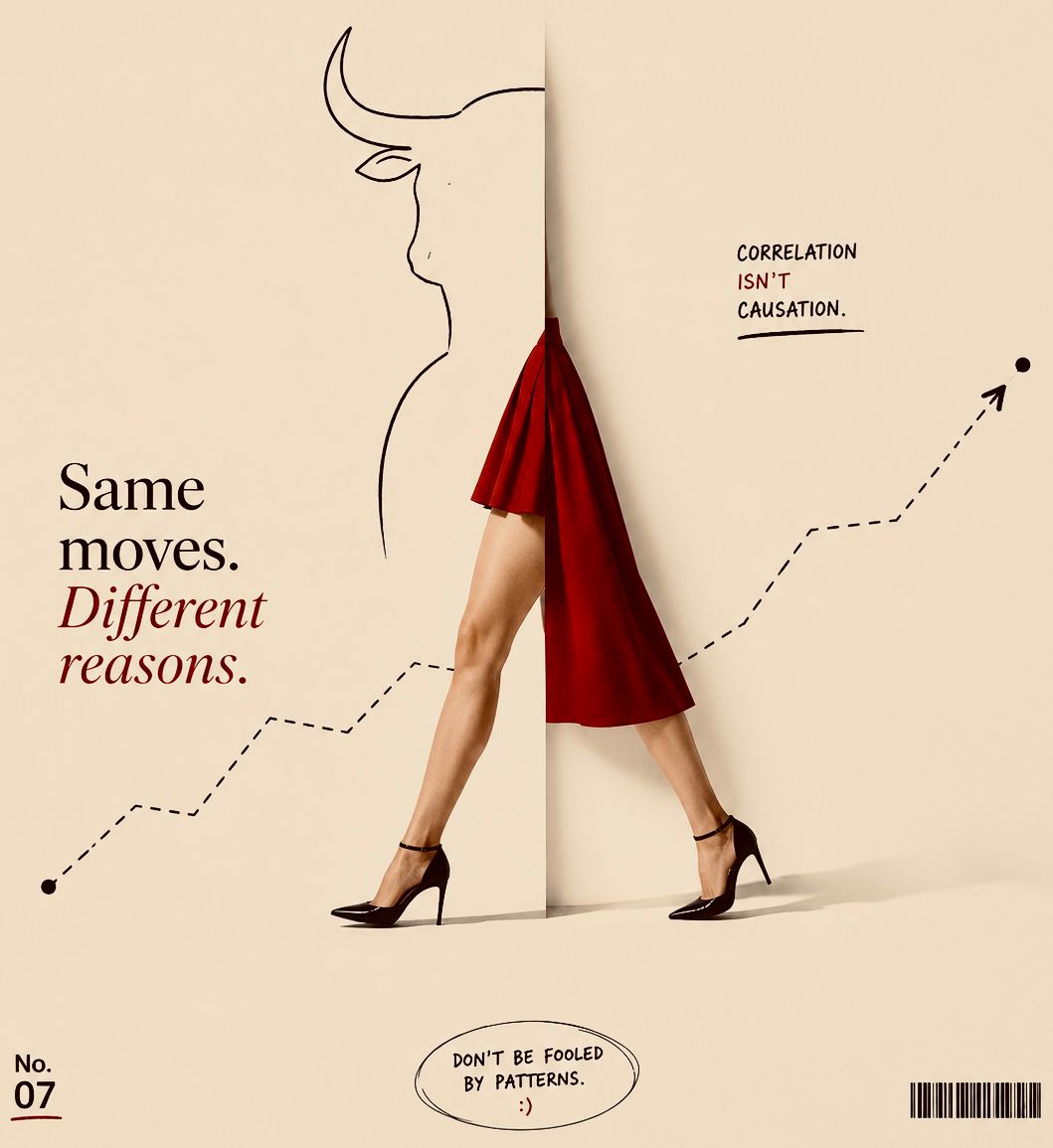
Show Me Your Shorts, I'll Show You the Market

Show Me Your Shorts, I'll Show You the Market

It was the spring of 2023. Pedro Pascal, meanwhile, looked stunning on the Met Gala red carpet in fitted black shorts, a floor-length red Valentino coat, and glossy military boots. He recently became the collective parent, boyfriend, and fashion icon of the internet. It was raining. He showed his legs anyway.

That year, the S&P 500 saw a 26.3% increase.

Paul Mescal was sitting in the front row at Gucci's Spring/Summer 2025 menswear presentation in the summer of 2024. He was wearing what could be called boxer shorts and an unbuttoned shirt. He informed the media, "I like the short inseam," as if that were a perfectly acceptable statement to make on a runway.

In the same year, Gucci's collection included similarly shortened bottoms in 41 of 46 designs. The US GDP grew by 2.8%.

And 2025 is the year. Elordi, Jacob. Dress shirts and striped boxers marked Jonathan Anderson's Dior debut. With fitted shorts, Saint Laurent kicks off Paris Fashion Week. Centimetres, not inches, are used to measure inseams. In spite of everything, the market continues to move.

Whether or not guys are wearing shorter shorts is not the question. They obviously are. Why does it consistently match the figures, I wonder?

CHAPTER 1 — The Immortal Index

Technically speaking, one of the most enduring economic theories that was never truly an economic theory is the Hemline Index.

One of the greatest telephone games in history is its origin tale. George Taylor, a Wharton economist, was researching the thriving hosiery sector in the 1920s, particularly the reasons for the skyrocketing sales of silk stockings. His response was straightforward: women were exposing their legs for the first time in recorded history, and skirts were becoming shorter. Demand for stockings increased when more legs were on view. It was not a forecast for the market, but rather an observation about the supply chain.

This evolved into the following somewhere between then and now: women's skirt length predicts the stock market.

The general understanding of the theory is as follows. Hemlines rise during prosperous economic periods; consider the miniskirt of the 1960s and the flapper dresses of the Roaring Twenties. Hemlines decline during uncertain and recessionary times; consider the maxi dresses that followed the 2008 financial crisis and the floor-length gowns of the Great Depression. Bear markets are associated with short skirts. Bear markets are associated with long skirts. It seems that your clothing has more knowledge than your broker.

It's a convincing theory. Additionally, according to Philip Hans Franses, a professor of applied econometrics at Erasmus University Rotterdam, it is "an urban legend."

CHAPTER 2 — data behind the legend

You must examine the times when the theory actually appears to be effective in order to comprehend why it endures. And they are numerous.

1920s. The US economy was booming. GDP increased by about 4.5% each year on average between 1922 and 1929. The price of stocks tripled. The flapper dress, which was knee-length, sleeveless, and scandalously modern, came to define the decade. Hemlines reached their shortest point of the era in 1926. At the time, women's knees were regularly on exhibit for the first time in Western fashion history.

The market fell in 1929. Hemlines had reverted to the calf by 1931.

1930s. With unemployment peaking at about 25% in 1933, the Great Depression created the worst economic conditions America had experienced in a century. Long, conservative, and floor-level skirts were popular. Historians have observed that women were not going out to celebrate. Simply put, there was less to rejoice over.

1960s. The prosperity that followed the war had developed into something remarkable. Over the course of the decade, the US GDP increased by 4.4% on average every year. Real salaries increased. Additionally, Mary Quant debuted the miniskirt in 1965. This outfit was so revolutionary that it earned its own Wikipedia page, a name, and a cultural moment. Hemlines didn't simply go higher. They vanished.

1970s. In 1973, OPEC imposed an oil embargo. The rate of inflation increased. The stock market faltered. Additionally, the fashion industry created the maxi skirt, the midi, and a preoccupation with floor-length bohemian shapes that reflected the overall economic anxiety of the decade.

2006–2008. The property market peaked at the same time as the baby-doll dress. Then, just as the world financial system started to fall apart, the maxi dress arrived, smooth and flowing.

If you spend enough time looking at this list, you will begin to believe. The figures match. The cloth shifts. Something is happening.

CHAPTER 3 — THE MEN JOIN THE CONVERSATION

Critics have long pointed out that the original hypothesis was based solely on women's fashion, which is a consequence of the presumption that women's wardrobe choices are emotionally responsive to outside circumstances in ways that men's are not. This is wrong, among other things.

since the guys have also been engaging in this behaviour.

The menswear trend of short shorts is not a 2023 innovation. It is an extension of a pattern that has existed for decades. Men wore short shorts as the norm during the 1980s, a decade marked by rapid economic growth, Reagan-era wealth, and ostentatious spending. The NBA used three-inch inseams. Split shorts caused running culture to explode. The thigh was just a part of daily life as the economy expanded.

Then came the recession of the 1990s. By the middle of the decade, everything had been replaced with knee-length basketball shorts and loose jeans. The thigh pulled back. It took around thirty years for it to come back.

When it returned, it did so forcefully. Pedro Pascal during the Met Gala in 2023. Valentino's Jacob Elordi. Gucci's Paul Mescal. The S&P 500 is reporting returns in the double digits. As the markets rose, seams shrank. If the Hemline Index is effective for women, then it follows that the Inseam Index is effective for men.

Naturally, the internet took note. The association turned into content. The information developed into a theory. The theory made headlines. And folks started nodding knowingly over the numbers as they said the headline at dinner gatherings.

CHAPTER 4 — The Untruthful Numbers

This is the point at when the narrative surpasses the headline in interest.

The idea was empirically examined in 2010 by economists Philip Hans Franses and Marjolein van Baardwijk of Erasmus University Rotterdam, something that had never been done previously. They compared economic cycle data from the National Bureau of Economic Research with the digitised archives of the French fashion magazine L'Officiel, which contained hemline data dating back to 1921. They have data spanning almost 90 years. The numbers were run.

They came to the conclusion that the Hemline Index is a myth.

The relationship between skirt length and economic success was not consistently predictive. Instead, they discovered a slight, speculative hint that fashion might follow the economy with about a three-year lag; that is, if the economy is booming now, skirts might become shorter in three years. Not as a forecast. In retrospect.

The notion was tested against Croatian GDP data from 2004 to 2019 using Google Trends search data for "miniskirts" and "maxi skirts," according to a 2020 study published in the International Journal of Fashion Design, Technology and Education. Their conclusion: "little to no evidence that the Hemline Index Theory is valid." They came to the conclusion that skirt length trends cannot be accurately predicted by the economy.

Everything gets complicated in the 1950s. By the logic of the theory, shorter hemlines should have resulted from post-war economic prosperity. Rather, it created the most conservative, covered-up silhouettes of the century, including the midi lengths, nipped waists, and voluminous skirts. Launched in 1947, Dior's New Look marked a clear return to longer hemlines during the period of economic recovery. This is not the only place where the theory falters. It collapses.

Another boom era, the 1980s, produced structural shoulder pads and power suits rather than miniskirts. When you look more closely, the association that was so clear in the 1920s and 1960s just vanishes.

CHAPTER 5 — The real explanation

What, therefore, drives hemlines if not the economy?

To be honest, the answer is everything else. To be honest, why did we believe that the economy was the sole factor?

Mass psychology, cultural moment, political mood, material availability, and the unique brilliance or passion of whoever happens to be designing at any given time all influence fashion. Mary Quant's miniskirt was more than just a fashion statement. It was a reaction to the contraceptive pill, a feminist declaration, a generational uprising, and the result of London's unique cultural electricity in 1965. To summarise it as "GDP was up" would be to overlook nearly the whole narrative.

There was more to the lengthier hemlines of the Great Depression than merely economic conservatism. Practicality, the loss of social infrastructure, and fabric rationing all influenced what people wore. Rather of making a statement on the Dow Jones, women covering their legs in the 1930s were reacting to a complicated emotional and material reality.

The resurgence of men's short shorts in the 2020s is likewise multifactorial. It is the result of a generation of guys who were exposed to Harry Styles wearing dresses on magazine covers as children, who grew up during a time when the definition of masculinity was drastically expanded, and who are actually less self-conscious about flashing their thighs than their fathers were.

It is the result of certain celebrities who looked good while wearing certain items in public. The economy is not a director, but a backdrop.

Confounding variables are the invisible third factors that give the appearance of a connection between two unconnected things. Hemline lengths and stock market performance follow more general changes in societal freedom, cultural confidence, and general attitude. People dress extravagantly and make extravagant investments when the times seem vast. The markets and the clothing industry are reacting to the same fundamental signal. They are not causing one another.

CHAPTER 6 — Correlation does not equal causation

The Hemline Index is still in use because it is practical rather than because it is accurate.

It provides us with a tangible and observable means of discussing the actual, profound, and truly worthwhile relationship between economics and culture. lengths of skirts. measures of the inseam. things that are visible.

Correlation does not indicate causation, as the statistician pointed out. However, if presented without context, it can also be a conversation-ender, disguising itself as wisdom. Asking what the correlation is truly tracking is a more intriguing move. What is the third factor that, over a century of data, causes the numbers to consistently but imperfectly line up?

The collective emotional temperature is the answer. the attitude of a community. The extent to which individuals feel liberated, hopeful, and eager to occupy space, whether it be on a runway or at a market.

In the end, both fashion and economics are large-scale manifestations of the human psyche. They move in tandem because they share a source rather than because one causes the other. When people are confident, the stock market rises. When people feel liberated, hemlines rise. These are the same emotions, yet they are expressed in various ways.

Pedro Pascal entered the Met Gala in the rain while flashing his calves because there was a cultural vibe that made it seem acceptable, admirable, and even desirable. The same something was also, that year, flowing into equity markets and GDP growth figures.

Neither one caused the other. But they were both telling the same story.

"Correlation does not imply causation — but it does waggle its eyebrows suggestively and gesture furtively while mouthing 'look over there.'"
60 Sec Economics

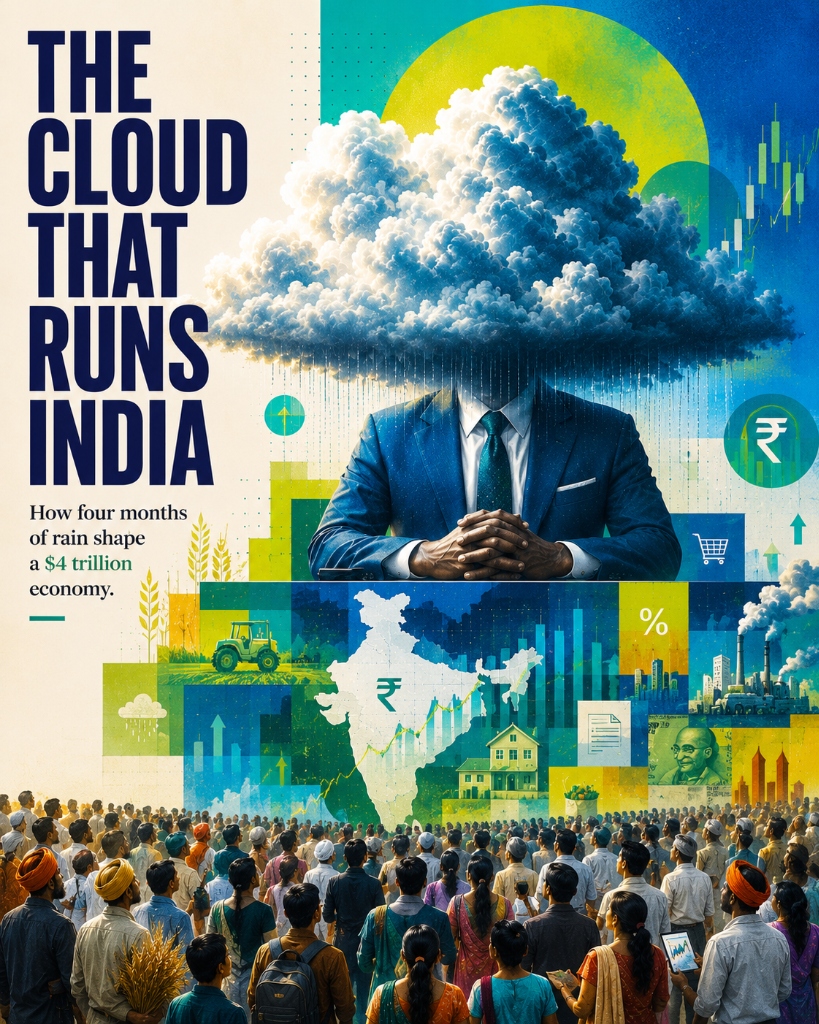
THE CLOUD THAT RUNS INDIA

THE CLOUD THAT RUNS INDIA

How four months of rain shape a $4 trillion economy.

Can a Bad Monsoon Crash India’s Economy?

What if I told you that some of India’s biggest economic decisions don't happen in a boardroom, but depend entirely on a cloud?

Not a government policy. Not the stock market. Not even the Reserve Bank of India.

Just a massive, unpredictable bank of rain clouds rolling in from the Indian Ocean.

Every year between June and September, the entire country holds its breath for the southwest monsoon. And it’s not just farmers looking at the sky, it’s fund managers in Mumbai, tech executives in Bengaluru, and policymakers in Delhi. Because when the rains fail, the shockwaves ripple through parts of the economy you’d least expect.

The 50-50 Gamble

To understand why, you have to look at the math of Indian engineering and tradition. We like to think of India as a global tech and manufacturing powerhouse, which it is. But nearly half of India’s workforce still relies on agriculture for their livelihood.

Here is the tricky bit: despite decades of building dams and canals, roughly 50% of India’s farmable land has no artificial irrigation. It is completely dependent on whatever falls from the sky.

When the monsoon underdelivers, the immediate script is predictable: crops like rice, pulses, and oilseeds suffer. Supply drops, and food prices shoot up.

The Fast-Moving Consumer Problem

But here is where the story gets interesting for the rest of us. When food prices spike, it triggers a chain reaction across the entire consumer economy.

Think about a rural family. If they are spending a massive chunk of their monthly income just to buy vegetables and pulses because of a bad harvest, their disposable income evaporates. Suddenly, they aren't buying that new Hero bike. They defer upgrading their smartphone. They buy smaller, cheaper packets of Britannia biscuits or shampoo.

Economists actually track things like "rural tractor sales" and "two-wheeler registration numbers" as a direct pulse check on the monsoon. If rural India stops spending, corporate India’s profits take a massive hit.

Why the Economy Won't "Crash" (But Will Ache)

Now, if you look at the raw numbers, you might wonder why everyone panics. Today, agriculture only makes up about 15% to 18% of India's overall GDP. Decades ago, a severe drought could genuinely break the back of the entire economy. Today, India’s massive services sector (IT, finance, telecom) and manufacturing base provide a heavy bulletproof vest.

So, a bad monsoon won't crash the economy into a deep depression. But it can absolutely stall our momentum.

It does this primarily by hijacking the Reserve Bank of India (RBI). When food inflation gets too high, the RBI is forced to act like a strict parent, they raise interest rates to cool down the economy.

And what happens when interest rates go up? Your home loans get more expensive, car loans cost more, and businesses find it pricier to borrow money to expand.

The Bottom Line

That is why investors track cumulative rainfall percentages and the "El Niño" weather phenomenon just as obsessively as they track corporate earnings reports.

In India, rain isn't just a weather forecast or a break from the summer heat. It is a psychological trigger, a corporate catalyst, and a brutal economic indicator.

Sometimes, the difference between a roaring financial year and a stagnant one can still be measured in millimetres.

Monthly Deep-Dive

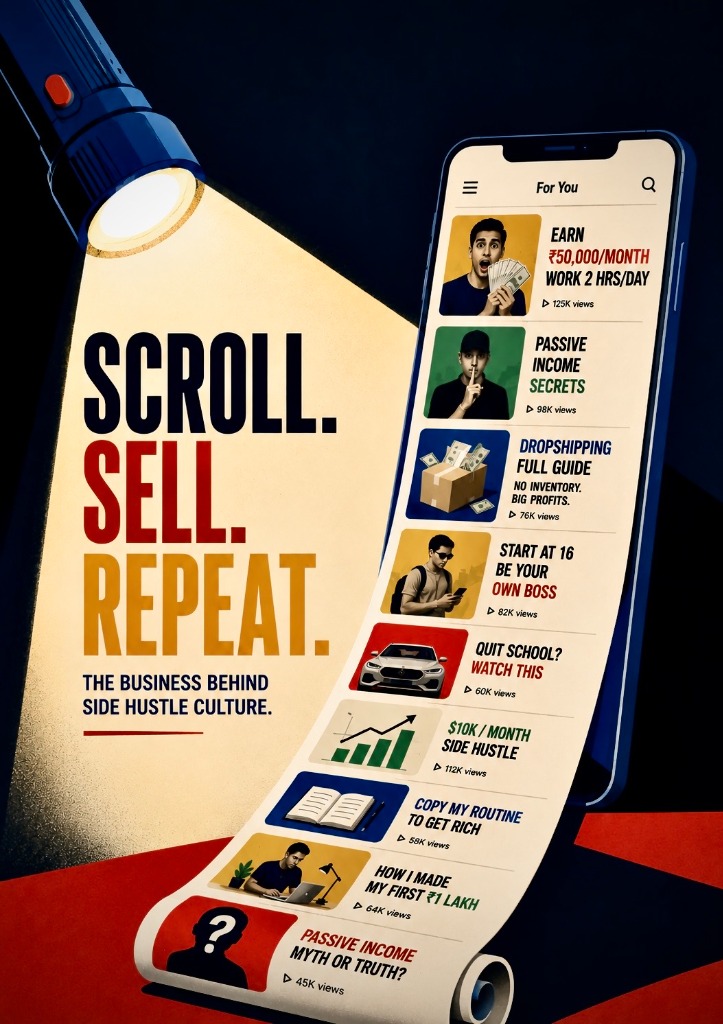
The Hustle Generation: When Childhood Meets Capitalism

The Hustle Generation: When Childhood Meets Capitalism

"Retire your parents by 25." "Make your first lakh before college." "Build six income streams before your friends get their first job."

Scroll through social media for ten minutes and these messages will find you. They arrive wrapped in motivational music, luxury cars, screenshots of revenue dashboards, and twenty-year-olds explaining how they "escaped the matrix" through dropshipping, freelancing, crypto, content creation, affiliate marketing, or the latest side hustle trend. What was once the language of ambitious entrepreneurs has become the vocabulary of teenagers.

Welcome to the side hustle economy. An ecosystem that has transformed from a niche movement into a cultural phenomenon.

Today, earning money is no longer viewed as something that begins after graduation. It starts during school. Sometimes during middle school. Young people are launching online stores, editing videos, managing social media accounts, selling digital products, tutoring online, and creating content before they are old enough to vote. In many ways, this shift represents one of the most fascinating economic and cultural developments of the digital age.

Yet beneath the motivational quotes and success stories lies a more complicated reality. The rise of the hustle culture has created opportunities that previous generations could only dream of, while simultaneously introducing pressures that previous generations never had to endure.

The side hustle economy is neither the salvation its advocates claim nor the disaster its critics predict. It is something far more interesting: a mirror reflecting the hopes, anxieties, ambitions, and contradictions of modern society.

The Democratization of Opportunity

For most of history, making money required access.

Access to capital. Access to connections. Access to education. Access to opportunities.

The internet disrupted that equation.

A teenager with a smartphone now possesses tools that would have seemed extraordinary twenty years ago. They can reach a global audience, sell products internationally, learn high-income skills through free tutorials, and build businesses from their bedrooms.

This accessibility explains much of the side hustle economy's explosive growth.

Unlike traditional employment, side hustles often promise flexibility and independence. A student can edit videos after school, design graphics on weekends, or earn through content creation without waiting for a formal employer to grant them permission.

For many young people, particularly those from middle-class or lower-income households, side hustles represent something deeply meaningful: agency.

The desire to "retire your parents" has become a recurring phrase among Gen Z not merely because it sounds inspiring but because it reflects a genuine aspiration. Many young people have watched their parents work tirelessly through economic uncertainty, rising living costs, and increasing financial pressures. The dream of easing that burden is rooted in gratitude rather than greed.

And there is something undeniably positive about a generation becoming financially literate at an early age.

Teenagers today discuss investing, budgeting, compound interest, entrepreneurship, and personal finance with a fluency that many adults lacked at the same age. Financial awareness is no longer confined to business schools and corporate boardrooms. It exists in YouTube tutorials, podcasts, Discord servers, and social media feeds.

In this respect, the side hustle movement has achieved something remarkable. It has made conversations about money less taboo and more educational.

The Rise of the Teenage CEO

Yet every cultural movement develops its own mythology.

The mythology of hustle culture is built around extraordinary exceptions.

Social media rewards spectacle. Nobody goes viral by posting, "I worked consistently for three years and achieved moderate financial stability." Instead, audiences are presented with stories of eighteen-year-olds making six figures, nineteen-year-olds buying luxury cars, and twenty-year-olds purchasing apartments.

These stories are real—but they are also statistical outliers.

What often goes unnoticed is the silent majority. For every viral success story, thousands of people earn little or nothing. Many side hustles require substantial time, effort, learning, and sometimes luck before producing meaningful results.

The result is an environment where extraordinary achievements begin to look ordinary.

Teenagers who should be proud of earning their first few hundred rupees online sometimes feel inadequate because someone on their feed claims to be making lakhs every month.

Success, once measured against personal growth, is increasingly measured against algorithmic fantasy.

This comparison trap has become one of hustle culture's most significant side effects.

When Every Hobby Becomes a Business

Perhaps the most subtle consequence of the side hustle economy is the transformation of leisure itself.

There was a time when hobbies existed simply because people enjoyed them.

Writing was writing. Hobbies were hobbies. Photography was photography. Drawing was drawing.

Today, every hobby seems to arrive with a follow-up question: "How can you monetize it?"

The pressure to convert every interest into an income stream has blurred the line between passion and productivity.

This mindset can be empowering. It allows people to earn from talents that might otherwise remain dormant. But it can also be exhausting.

When every activity becomes a potential business opportunity, rest begins to feel unproductive. Creativity becomes transactional. Personal interests become performance metrics.

The danger is not that young people are becoming ambitious. The danger is that they may begin to believe their value is determined solely by their earning potential.

The Gurus Who Cracked the Code

No discussion of the side hustle economy would be complete without examining its most profitable participants.

Ironically, many of the people teaching side hustles earn more from teaching than from the side hustles themselves.

The internet is filled with self-proclaimed experts selling courses that promise financial freedom, passive income, secret formulas, and step-by-step blueprints to wealth. Some provide genuinely valuable information. Many do not.

The business model is deceptively simple:

1. Create content about making money.
2. Attract an audience seeking financial improvement.
3. Sell a course explaining how to make money.
4. Use revenue from course sales as proof of expertise in making money.

The cycle continues.

This does not mean all educational content is fraudulent. There are countless legitimate educators offering practical guidance. However, the industry thrives on one powerful commodity: hope. People are often not buying information. They are buying possibility. The promise that there is a shortcut. The belief that someone has cracked a hidden code. The reassurance that success can be purchased for the price of a course.

In reality, there is rarely a secret formula. Most successful ventures still depend on consistency, skill development, patience, and resilience—qualities that are considerably less marketable than "Make ₹1,00,000 in 30 Days."

Renting the Dream

Social media has introduced another fascinating dimension to hustle culture: the performance of success.

Luxury apartments appear in videos. Exotic vacations fill Instagram feeds. Sports cars feature prominently in motivational reels. Yet many of these symbols are temporary.

Properties are rented. Cars are borrowed. Airbnbs are booked for photoshoots. Entire lifestyles are curated to project a narrative of success.

This phenomenon is not unique to hustle creators, but the side hustle industry depends heavily on visual proof. The audience must see success before they can believe it. As a result, appearances often become marketing assets. The problem is not that creators showcase their achievements. The problem arises when carefully constructed images are mistaken for everyday reality. Young audiences, particularly teenagers, may compare their genuine lives to someone else's professionally managed highlight reel. The comparison is inherently unfair: one side is reality, the other is advertising.

Why the Movement Continues to Grow

Despite its flaws, hustle culture shows no signs of disappearing. The reasons are understandable.

Traditional career paths no longer offer the certainty they once did. Rising living costs, economic instability, competitive job markets, and rapid technological change have encouraged people to diversify their income sources. A side hustle is often less about becoming rich and more about creating security. For some, it pays bills. For others, it funds education. For many adults, it serves as a financial cushion against uncertainty.

The side hustle economy has become especially valuable because it acknowledges a simple truth: relying on a single source of income can feel increasingly risky. In this sense, side hustles are not merely trends. They are adaptive responses to modern economic realities.

The Verdict: Ambition Without Obsession

The side hustle economy represents both the best and worst instincts of contemporary culture.

At its best, it encourages initiative, creativity, financial literacy, independence, and entrepreneurship. It empowers individuals to take control of their economic futures and explore opportunities that previous generations never had access to.

At its worst, it transforms life into a never-ending productivity contest. It convinces people that rest is laziness, that every passion should generate profit, and that self-worth can be measured in revenue.

Perhaps the healthiest approach lies somewhere between these extremes. There is nothing wrong with wanting financial success. There is nothing wrong with wanting to support your family. There is nothing wrong with building a business, learning skills, or creating additional income streams.

But there is also nothing wrong with being sixteen and simply being sixteen.

Not every teenager needs a startup. Not every hobby needs monetization. Not every free moment requires optimization.

The true challenge for the hustle generation is not learning how to make money. It is learning how to pursue ambition without allowing ambition to consume everything else.

Because wealth is valuable. But so are friendships, curiosity, creativity, sleep, joy, and the freedom to exist without constantly calculating your market value. The side hustle economy may be reshaping how people earn. The question that remains is whether it will reshape how people live.

And that answer, unlike any online course promises, has not yet been written.

Monthly Deep-Dive

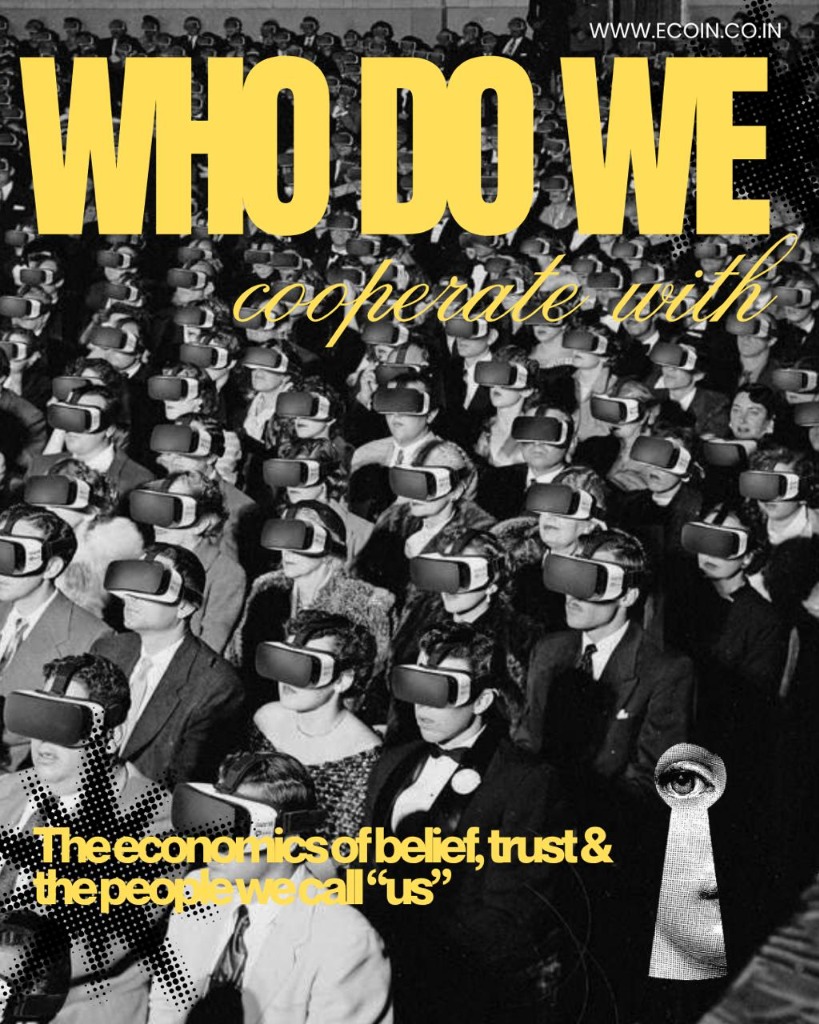
Religion and Economic Cooperation: The Role of Social Preferences

Religion and Economic Cooperation: The Role of Social Preferences

How Do Different Types of Religious Belief Affect Cooperation and Parochial Altruism?

Parochial altruism is a generosity and trust towards one’s in-group, and suspicion and hostility toward outsiders, regardless of the cost to oneself. While this is not universally common, those who exhibit it are genuinely prosocial towards their own, even at a personal cost, but rarely extend this morality beyond their in-group. In any discussion of religion and its relationship with morality, the role of religion as a force that draws moral boundaries around particular social groups and defines them as morally superior to others is impossible to ignore.

Religious beliefs are often associated with several ideas that facilitate the formation of exclusive social groups and the development of morality within them. The promise and threat of supernatural punishment and reward reinforce the idea that morality is an absolute value, and that it must be upheld by all, even if they do not believe so themselves. This is demonstrated by the results of the cross-cultural survey, which showed that more religious respondents are more likely to hold positive views about their own group and believe their group to be more moral than others. The results of several studies on generalized trust and economic games corroborate this trend, suggesting that religiously cohesive groups are more likely to be cooperative with each other, but not necessarily with outsiders. Across cultures, however, religious beliefs that rely on highly codified rituals and impose strict punishments for violations show higher levels of both in-group altruism and cooperation.

Not all religious beliefs, however, are similarly linked to parochial altruism. Religious beliefs that are based on the notion of a deity that cares about the welfare of all people are effectively unable to overcome the in-group bias, despite holding moral values that are theoretically universal. There is, however, an alternative explanation for this observation, which also supports the overall conclusion. It is possible that many religious beliefs that promote universal love and charity are effectively designed to operate on a larger scale, gradually transforming society in a more altruistic direction. By engaging in rituals and following moral codes prescribed by religious doctrines, people internalize the idea that their actions reflect the image of an omnipotent God, and therefore should be universally morally good. Empirical evidence corroborates this theory, showing that people who hold strongly to the idea of an all-seeing and punishing God, and therefore believe in His constant judgment, are more likely to act charitably towards strangers. Even in predominantly religious areas and among religious people themselves, similar trends are observed in attitudes towards the religiously other. This phenomenon is particularly evident in the Middle East, where belief in an all-powerful God is common across the region and is associated with more charitable attitudes toward members of the opposing religious group.

Although the tendency is evident, the effect of such doctrines on people’s morality remains largely superficial. In most cases, people are significantly more likely to be charitable and cooperative towards their close ones rather than anonymous strangers. The tendency is particularly evident when religious doctrines are applied more narrowly, such as when respondents are encouraged to think about their Church rather than God in the abstract. In this case, religiously inclined people are more likely to exhibit parochial altruism in favor of their in-group and against the out-group. This is especially evident in a study conducted in Ghana and Tanzania, where Christian and Muslim respondents who held strongly to the belief in their religion’s exclusivity were significantly less altruistic towards the members of the other group in a charitable giving game. Interestingly enough, when asked to consider the doctrine of universal love, respondents showed less prejudice in their attitudes towards the other religious group. It is not religion per se that drives favoritism, but specific beliefs about whether an almighty being exists that cares about people beyond their social group. Similar consequences are seen when researchers tested beliefs about God’s universal love, replacing them with love extended to the respondent’s in-group.

Outside of the concept of love, gods often care about other things, such as the welfare of one’s social group. The same principle applies to the punishment aspect; gods often punish people for a wide range of wrongdoings, but many are only concerned about matters that affect their in-group, such as the distribution of resources. A local spirit in an Indonesian tribe is believed to care only about the internal affairs of one’s clan and punish selfishness accordingly, without intervening in other matters. By being concerned with selfishness in general and the well-being of one’s in-group, such a god embodies both morality and parochial altruism, which in turn makes the religion rooted in it both exclusive and altruistic towards the members of the in-group. It is no wonder then that across different cultures, gods tend to combine caring for one’s in-group with the active punishment of selfishness and other immoral acts.

Of the concepts discussed above, punishment has proven to be an especially powerful tool in enforcing morality. The mere belief in an all-powerful and all-seeing God does not appear to be enough to enforce morality; rather, people need the belief that this God can and will punish them for their wrongdoings. This has been shown by numerous tests asking respondents whether a God would know about their moral transgressions and whether this God would be able to punish them, with belief in the latter leading to significantly more moral behavior. Notably, belief in a God that can see everything is not linked with belief in punishment outside of an explicitly moral context, which makes it unclear how the two concepts relate. As societies grew larger and more complex, their gods grew alongside them, being concerned with a larger number of social interactions and punishing them in accordance with their importance. In many ways, gods serve a similar function to the emergence of state institutions; in places and times when the latter were unavailable, the former acted as the ultimate judge in disputes between strangers, helping to facilitate large-scale cooperation.

This leads into a discussion of deism, which posits the existence of a creator God who does not intervene in the day-to-day affairs of people on Earth. Deism, as a doctrine, removes three crucial elements of religion; the God described by it is incapable of punishing people, judging their actions or caring for them individually. If anything, deism provides a good foundation for the opposite of parochial altruism; the God it worships does not care whether people are moral or not, meaning that they do not need to care either. By removing punishment, deism undercuts any reason for people to practice morality. And by the same logic, deism should also be weaker at producing favoritism, since it lacks the rituals and group bonding that usually fuel it in the first place. No study has directly compared deists with believers in more active or punishing gods, so this is more of an educated guess than a proven result. Still, based on everything else here, it's a reasonable one: deism should pull weakly in both directions, toward cooperation and toward favoritism alike.

What shapes cooperation and favoritism isn't how religious someone is, but what kind of god they believe in and what that god is thought to actually do. A god who cares about fairness can stretch generosity beyond the in-group, at least in how people think and talk. A god who punishes seems to be what actually changes behavior. And a god tied closely to one particular community tends to keep that generosity close to home.

Deism, missing punishment, monitoring, and ritual, would be expected to fall short on both fronts, though that's still a prediction rather than something anyone has directly tested. Religion's role here, while real, isn't huge on its own either. Plenty of other things, like strong laws, economic systems, and cultural history, shape cooperation too. Religion doesn't drive cooperation and favoritism just by being present. It does so through the specific stories people believe about their god: who that god cares for, what that god wants, and what that god will do about it.

Monthly Deep-Dive

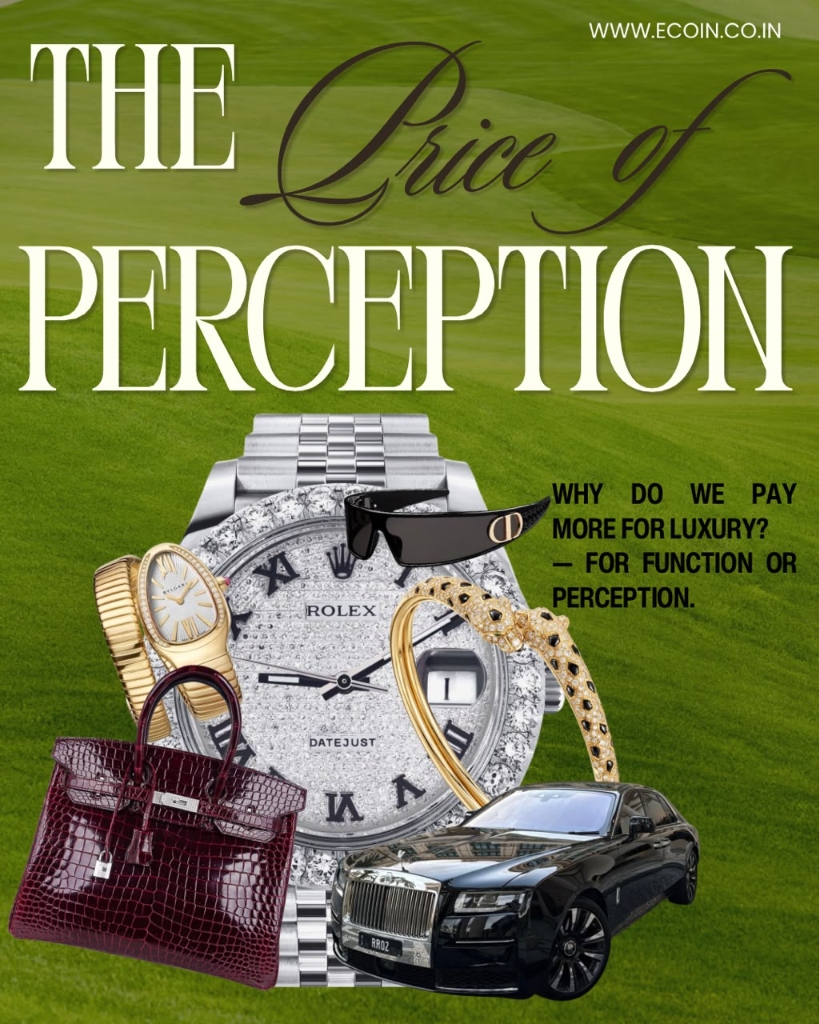
The Economics of Luxury: Why Do People Pay More for Less?

The Economics of Luxury: Why Do People Pay More for Less?

Why would someone spend thousands of dollars on a watch when a much cheaper alternative can perform the same basic function? Why can a Hermès handbag cost tens of thousands when an ordinary leather bag can carry the same belongings?

The obvious answer is that luxury products are better made. But that only explains part of the price.

The deeper economic question is why consumers are willing to pay so much more for a product whose functional usefulness may not be proportionally greater.

Luxury markets work because firms have learned to increase willingness to pay by attaching additional value to a product: status, exclusivity, craftsmanship, identity, heritage and reputation. These factors change the consumer’s perception of the product itself. A Rolex is no longer competing only with other devices that tell time. A Hermès handbag is no longer competing with every bag that can carry belongings.

This allows luxury firms to create something economists care deeply about: pricing power.

The economics of luxury therefore lies in the gap between production cost and perceived value.

1. Price Elasticity: How Much Can Luxury Brands Charge?

A useful starting point is price elasticity of demand, which measures how responsive quantity demanded is to a change in price.

For an ordinary product with many close substitutes, demand is likely to be relatively elastic. If one brand raises the price of a similar product substantially, consumers can switch.

Luxury is different because consumers are not necessarily buying interchangeable products.

A wealthy consumer purchasing a €10,000 watch may be relatively insensitive to a moderate price increase. An aspirational consumer who has spent months saving for the same watch may be much more price-sensitive.

This distinction has become increasingly visible in the luxury slowdown.

Bain estimated that the global personal luxury-goods market was worth around €362 billion in 2023. In 2024, it expected the market to contract by around 2% at current exchange rates, while the customer base shrank by approximately 50 million people over two years. The pressure was particularly strong among aspirational consumers, who had less disposable income and were more affected by repeated price increases. (Bain & Company)

The pricing strategy of luxury companies demonstrates why elasticity matters. Reuters reported that luxury prices increased by an average of around 33% between 2019 and 2023, with price increases accounting for a substantial share of industry sales growth. Chanel’s 2023 sales, for example, increased 16%, with higher prices playing a major role. (Reuters)

But pricing power has a limit.

Mainland China’s personal luxury market declined by approximately 18–20% in 2024, according to Bain, as consumers became more cautious about discretionary purchases and increasingly questioned repeated price increases. (Bain Preprod CMS)

This reveals an important economic distinction:

Luxury demand can be relatively inelastic for some consumers, but it is not perfectly inelastic.

When prices rise beyond what consumers believe the brand can justify, quantity demanded eventually responds.

2. The Veblen Effect: When Price Becomes Part of the Product

Luxury becomes even more interesting when we move beyond conventional demand theory.

In standard economics, an increase in price should reduce quantity demanded, ceteris paribus. But some goods can behave differently when the price itself communicates information.

This is where the Veblen effect enters.

Economist Thorstein Veblen’s concept of conspicuous consumption describes situations in which consumers derive utility partly from displaying wealth or social position. Later economic models formalised conditions under which higher prices can actually increase the desirability of luxury goods because price functions as a signal of wealth. (Columbia Business School)

Imagine two watches that perform essentially the same basic function.

One costs ₹20,000.

Another costs ₹5 lakh.

The second watch is not 25 times better at telling time. But the consumer may not be buying only its functional service. They may also value its craftsmanship, heritage, recognisability and status.

The ₹5 lakh price therefore communicates something.

This creates a different chain of reasoning:

Higher price → greater perceived exclusivity/status → higher perceived utility → potentially higher willingness to pay.

That does not mean luxury goods permanently violate the law of demand. The Veblen effect depends on the product already having social meaning.

A high price attached to an unknown handbag does not automatically make it desirable. The signal only works because consumers already recognise the brand and understand what the price represents.

This creates a feedback loop:

Reputation → credibility of high price → exclusivity/status → stronger demand among some consumers → stronger reputation.

The price is no longer simply a sacrifice the consumer makes to obtain the product.

It becomes part of the product’s meaning.

3. Product Differentiation: Luxury Brands Make Substitution Harder

This brings us to product differentiation, one of the most important sources of market power in luxury.

In a highly competitive market, firms face a simple constraint: substitutes.

If two products are perceived as identical and one costs ₹1,000 while the other costs ₹5,000, most consumers have little reason to choose the expensive one.

Luxury companies therefore work to ensure their products are not perceived as identical substitutes.

A Hermès Birkin is not marketed as simply a leather bag. A Rolex Submariner is not marketed as simply a timekeeping device.

The products are differentiated through design, craftsmanship, heritage, distribution, storytelling, service and brand recognition.

That changes the consumer’s comparison set.

Instead of asking: “What is the cheapest bag that performs this function?”, the consumer may ask: “What other product gives me this particular combination of craftsmanship, design, heritage and status?”

The number of close substitutes suddenly becomes much smaller.

LVMH’s own reporting illustrates how seriously luxury groups treat this differentiation. Its Fashion & Leather Goods division, which includes Louis Vuitton and Dior, generated €41.06 billion in revenue in 2024 and €15.23 billion in recurring operating profit, giving the division a 37.1% operating margin. LVMH also reported more than 2,300 stores across its Fashion & Leather Goods brands at the end of 2024 and described control over distribution as a strategic priority because it protects brand image and the customer experience. (LVMH Urd)

The economics here is straightforward: Fewer close substitutes → lower cross-price pressure → greater pricing power.

Luxury brands are therefore not simply selling products. They are constructing a market in which their product is difficult to compare directly with a cheaper alternative.

4. Brand Equity: The Invisible Asset Behind the Price

If differentiation explains why consumers do not immediately switch, brand equity explains why they are willing to pay a premium in the first place.

Brand equity is the economic value created by consumer recognition, associations, loyalty and perceived quality.

Think about what happens when a consumer sees a small leather bag with no visible branding.

Now imagine the same consumer sees a bag associated with a globally recognised luxury house.

The physical materials may differ, but the economic difference is not necessarily proportional to the additional leather or labour.

The second product carries decades of accumulated information.

Consumers already have expectations about its quality, design and social meaning. That accumulated reputation becomes an economic asset.

Hermès provides a particularly striking example. In 2024, the company generated €15.17 billion in revenue and €6.15 billion in recurring operating income, equivalent to a recurring operating margin of 40.5%. (Hermès Finance)

These figures should not be interpreted as a simple “markup” on a handbag. The margin also reflects the costs of stores, employees, production, marketing, administration and distribution.

But it demonstrates something important: a powerful brand can generate unusually high profitability because consumers are paying for a value proposition that extends beyond the physical materials.

The economic asset is intangible. It is stored in the consumer’s mind.

5. Scarcity: Why Being Hard to Get Can Make Something More Valuable

Scarcity is often presented as the complete explanation for luxury pricing: Less supply = higher price.

But that is too simplistic.

Scarcity only creates significant economic value when demand already exists.

If an unknown company produces only ten handbags, those ten bags are scarce. That does not mean consumers will suddenly pay ₹10 lakh for each.

Luxury works differently: Established demand + restricted availability = perceived rarity.

Hermès’ tightly controlled distribution and limited availability of highly sought-after products help create this effect. The consumer is not simply purchasing a bag; they are purchasing something that is difficult to obtain.

This can create artificial scarcity alongside genuine production constraints.

A handcrafted product may genuinely require skilled labour and significant production time. But firms can also control quantities, distribution channels and access to certain products.

The economic effect is powerful because scarcity can increase the perceived opportunity cost of not buying. If a consumer believes the product will remain difficult to obtain, waiting becomes more costly.

But scarcity has another economic condition: It must remain credible.

If a luxury brand suddenly becomes available everywhere, the scarcity premium can disappear.

Recent research on the “democratisation” of luxury supports this idea. A 2025 study found that increased accessibility can reduce purchase intentions among traditional luxury consumers, particularly when the brand becomes associated with lower-status consumers. (Eprints Soton)

In other words, luxury faces an unusual problem: Too little visibility makes the brand irrelevant. Too much accessibility can make it less exclusive.

6. Social Media: Signalling Has Gone Digital

Social media has dramatically expanded the audience for conspicuous consumption.

A luxury watch once signalled wealth primarily to people physically around its owner. Today, a single Instagram post can expose that product to thousands of viewers.

This increases the social value of recognisable products.

Influencers, celebrities and peers act as sources of information about what products are desirable. Consumers do not have to personally know whether a particular handbag is prestigious; repeated exposure can teach them what brands are associated with status.

Academic research supports this relationship. A study published in the Journal of Retailing and Consumer Services, using a sample of 282 respondents, found that social-media word-of-mouth positively influenced luxury purchase intention. (ScienceDirect)

The mechanism resembles a network effect: More people recognise the brand → the signal becomes easier to understand → the product becomes more socially valuable → more consumers want the signal.

But there is an interesting paradox: Luxury needs visibility to communicate status. Yet too much visibility can undermine exclusivity.

If everyone owns the same supposedly exclusive product, the product’s ability to differentiate its owner decreases.

This creates a tension between the bandwagon effect and the snob effect.

The bandwagon effect says people may value a product more because others value it. The snob effect says some consumers value a product precisely because fewer people have it.

Luxury brands therefore have to engineer a very narrow balance: Recognisable enough to signal status, but exclusive enough to remain distinctive.

7. Resale Value: A Luxury Good Is Not Automatically an Investment

The secondary market adds another layer to the economics of luxury.

Some luxury goods retain substantial resale value. Certain Rolex watches, Hermès handbags and collectible pieces can trade at high prices in secondary markets.

But this does not mean luxury goods should automatically be treated as investments.

The distinction is between a normal consumption good and a collectible asset.

A mass-produced designer handbag may depreciate significantly after purchase. A rare watch with strong collector demand may retain or increase its value.

The difference comes from characteristics such as scarcity, condition, authenticity, historical significance and changing consumer preferences.

And resale markets can move in both directions.

Luxury watches experienced a significant secondary-market correction after the pandemic boom. By 2024, luxury-watch secondary-market prices had fallen for multiple consecutive quarters, demonstrating that even highly desirable products are exposed to changes in demand. (YouTube)

This matters economically because expected resale value affects total cost of ownership.

Suppose a consumer buys a ₹5 lakh watch and expects to resell it for ₹4 lakh. The perceived cost of owning it is closer to ₹1 lakh than ₹5 lakh.

But that ₹4 lakh is an expectation, not a guarantee. Therefore, resale value can increase willingness to pay, but calling every luxury purchase an “investment” confuses a potentially valuable collectible with a financial asset.

8. The Counterargument: Can Luxury Prices Go Too Far?

There is a strong argument against the luxury industry’s pricing strategy.

If consumers increasingly feel that prices are rising faster than quality, the brand’s willingness-to-pay premium can collapse.

This is exactly why elasticity matters.

A luxury company may initially raise prices without losing many customers. But repeated increases can eventually push consumers across their reservation price — the maximum amount they are willing to pay.

The result is particularly visible among aspirational consumers.

McKinsey estimated that aspirational luxury consumers account for around 50% of luxury market value, despite representing only part of the overall consumer base. (McKinsey & Company)

These consumers are important because they help luxury brands expand. But they are also more vulnerable to economic pressure.

Bain estimated that around 50 million luxury customers disappeared from the market over two years, with aspirational consumers particularly affected. (Bain & Company)

This creates a strategic dilemma: Raise prices too slowly, and the brand may weaken its premium positioning. Raise them too aggressively, and customers may decide the product is no longer worth the premium.

The luxury industry is therefore constantly solving an optimisation problem: How high can price rise before perceived value stops rising with it?

9. What the Luxury Slowdown Tells Us

The recent performance of major luxury companies provides an important real-world test of the theory.

LVMH’s Fashion & Leather Goods division generated €41.06 billion in revenue in 2024, down from €42.17 billion in 2023. Recurring operating profit fell from €16.84 billion to €15.23 billion, while its operating margin declined from 39.9% to 37.1%. (LVMH Urd)

Hermès, meanwhile, continued to grow strongly in 2024, reaching €15.17 billion in revenue and a 40.5% recurring operating margin. (Hermès Finance)

The contrast matters. It suggests that “luxury” is not one homogeneous market.

Different brands possess different levels of pricing power, different customer bases and different levels of perceived differentiation.

The strongest brands can maintain demand even when prices are high because consumers perceive their products as difficult to substitute.

Other brands may discover that aspirational consumers are willing to walk away. That is economics in action.

So, Why Do People Pay More for Less?

The answer is that consumers are not necessarily paying more for less. They are paying for a different bundle of utility.

A ₹5,000 watch and a ₹5 lakh watch may provide similar timekeeping functionality. But functionality is only one component of consumer utility.

The luxury product can provide additional utility through craftsmanship, aesthetics, heritage, exclusivity, social signalling, brand identity, scarcity, and resale expectations.

The key economic variable is therefore not production cost. It is willingness to pay.

Luxury companies have built businesses around increasing that willingness to pay while limiting the availability of close substitutes.

That is why their biggest competitive asset is not necessarily the leather, steel or fabric inside the product. It is the economic value attached to the product before the consumer even buys it.

And that is the real paradox of luxury: The more successfully a brand turns a physical object into a symbol, the less its price has to be explained by the physical object itself.

This Week in Economics

SEBI and F&O Crackdown: What Changed for Retail Traders?

SEBI and F&O Crackdown

There are fewer people losing money in India's derivatives market. That sounds like good news. Until you ask why.

On 11 August 2026, the Ministry of Finance told the Rajya Sabha what everyone on Dalal Street already suspected: net losses of individual traders in equity derivatives fell to ₹91,685 crore in FY26, down from ₹1,11,788 crore the year before.

Eighteen per cent less blood on the floor. Somewhere in BKC, a victory was celebrated and a slide deck was probably updated.

Then you read the next line.

Unique individual F&O traders fell from 98.1 lakh to 78.6 lakh. And the average loss per surviving trader actually rose, from ₹1.13 lakh to ₹1.16 lakh.

Fewer people lost money. Each one lost more.

That is not exactly a cure. That is triage.

The rules, briefly, before the mockery resumes

Between November 2024 and April 2025, SEBI rolled out a series of measures designed to cool India's increasingly retail-heavy derivatives market, essentially making the game harder and more expensive to play.

The minimum index contract value was increased to ₹15 lakh. Weekly expiries were reduced to only one benchmark index per exchange, quietly ending the much-loved Wednesday circus. The upfront collection of option premiums became mandatory. Additional margin requirements were introduced on expiry day. The calendar-spread margin benefit disappeared, and brokers began verifying margins four times a day.

It made sense from SEBI's perspective.

Its own calculations were alarming. Ninety-three per cent of more than one crore individual traders lost money in equity derivatives between FY22 and FY24, with aggregate losses of ₹1.8 lakh crore. Meanwhile, proprietary desks and FPIs generated gross profits of roughly ₹33,000 crore and ₹28,000 crore respectively in FY24.

A SEBI member once made the point plainly: F&O was not supposed to become a national pastime.

He had a point. He was also describing a country where the pastime was beating most of the actual sports.

Who actually left?

Turnover fell from more than ₹213 lakh crore in FY25 to ₹202 lakh crore in FY26. And around twenty lakh individual traders disappeared from the segment.

Now ask who.

Not the whale. Not the ex-banker running short strangles off three monitors in Powai. Not the trader with a Bloomberg terminal and enough capital to survive a bad Tuesday.

The people most likely to be pushed out were the small traders. Someone trading with ₹8,000. Someone buying one out-of-the-money Bank Nifty call because a Telegram channel called SURESHOT PROFIT FAMILY promised a "sure shot" profit.

Triple the ticket price of a single lot and they do not magically transform into disciplined long-term investors. They are simply priced out of the casino.

SEBI raised the minimum bet. The smallest gamblers were escorted to the door and told it was for their own good. Which, uncomfortably, it might have been.

Nineteen and a half lakh fewer people participating in a market where most participants lose money is not nothing. In a country where household incomes can be modest, a 22-year-old torching the equivalent of months of family income on weekly expiry trades is not the free market expressing itself. It is a bad outcome with a broker's terminal attached.

The survivorship joke

There is another problem with celebrating the falling loss figure.

SEBI's own July 2025 study found that individual traders' losses had widened by 41% in FY25 to ₹1,05,603 crore, with 91% of traders still losing money. The later Parliament reply put FY25 losses at ₹1,11,788 crore.

Different datasets, different methodologies, different totals. Even the numbers being used to prove the medicine worked cannot quite agree on how sick the patient was.

And then there is survivorship.

The traders still in the market are not necessarily representative of the traders who started there. They are more likely to be better capitalised, more experienced, more committed — and perhaps subscribed to something with the word "quant" in it.

They also lost more per head than the previous year's average trader.

That is the finding nobody particularly wants to put on a slide: removing the smallest fish did not suddenly make the pond safer for the fish that remained.

Meanwhile, the actual shark

Then there is the part of the story that makes the whole thing considerably more complicated.

In July 2025, SEBI barred Jane Street, alleging roughly ₹4,843 crore in unlawful gains linked to manipulation of expiry-day index prices. F&O turnover fell sharply soon after.

Sit with that sequence.

The regulator spent months tightening the rules around retail participation while one of the world's largest proprietary trading firms was simultaneously under scrutiny over alleged market manipulation.

Retail traders were clearly part of the problem. But they were never the entire problem.

And when liquidity falls, the consequences are not exactly a free lunch. Thinner markets can mean wider spreads, meaning traders pay more to enter and more to exit. The predator left the pond. The pond also got shallower.

The bill nobody itemises

Then there are transaction costs. Brokerage. STT. GST. Exchange charges. Stamp duty.

For a small trader, these costs can turn a coin flip into a losing proposition before the market has even had time to disappoint them.

And there is an uncomfortable contradiction here. The state warns citizens about the dangers of the derivatives casino while simultaneously collecting a cut from every hand dealt inside it. Both things can be true. Only one usually makes it into the press release.

The finfluencer economy, meanwhile, adapted with the speed of a cockroach surviving a nuclear test. Weekly-expiry courses became "positional swing" courses. Screenshot P&Ls got new lot sizes. The vocabulary changed. The incentives did not.

And when SEBI's board rejected the idea of an aptitude test for retail derivatives traders, the message was fairly clear: we will make it expensive. We will make it harder to trade. But we will not necessarily make it harder to understand.

The open question

And this is where the crackdown gets genuinely interesting.

Some of the money leaving F&O moved into intraday cash markets and small caps — hardly the definition of conservative investing. Some may have moved towards markets with fewer protections, where there is no STT, no KYC, and sometimes no meaningful recourse when the person on the other end of the trade stops answering their phone.

Meanwhile, more than 75% of loss-making traders continue trading after consecutive losing years. And before the crackdown, the share of F&O traders under thirty had risen from 31% to 43%.

The appetite did not disappear. The market changed around it.

So yes, SEBI may have achieved one important thing: fewer retail traders are losing enormous amounts of money in F&O. But that is only half the question.

Did it make the market safer? Did it reduce reckless speculation — or simply make speculation more expensive? Did it protect retail traders — or mostly remove the traders who could least afford to stay? And if the game itself remains, what exactly has been fixed?

Maybe fewer people losing ₹1.16 lakh a year really is the regulatory victory SEBI wanted. Or maybe the crackdown did something more complicated. It changed who could afford to play.

SEBI changed the rules. But did it change the game?

Meet The Founders

Aarini & Diva

Still students. still learning.
Just sharing it along the way.

About

EcoIn is a student-led platform making economics
simple, relevant, and actually interesting.

From everyday prices to larger policy decisions,
we break things down in a way that makes sense — without overcomplicating it.

What We Focus On

  • Indian markets & trends
  • Public policy and real-life impact
  • Everyday economics — pricing, demand, decisions

At EcoIn, we look at how policy, prices, and people connect in real life.

why EcoIn exists

to make sense of how everyday decisions and larger policies quietly shape each other.

Our Goal

To make economics: easy to understand, visual, relevant.